
 English


Views: 0 Author: Site Editor Publish Time: 2025-09-16 Origin: Site


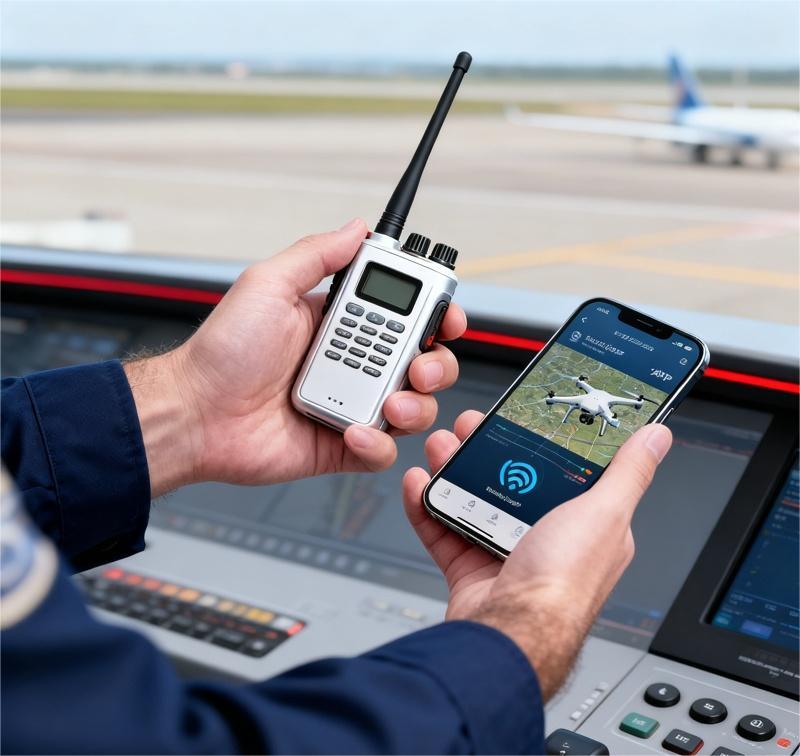
From crowded city skies to sensitive energy sites, drones bring both opportunity and risk. They enhance business and safety operations yet can disrupt when misused. To address these challenges, the FAA’s Remote ID rule now requires most drones in U.S. airspace to broadcast identity and location details.
Still, broadcasting alone is not enough. Remote ID Drone Detection ensures those signals are received, decoded, and used to identify and track aircraft in real time. In this guide, we’ll explain what Remote ID means, why detection is essential, how the systems operate, and where they are applied.
What is Remote ID for Drones?
Remote ID Detection Systems
How Remote ID Drone Detection Works
Real-World Applications of Remote ID Drone Detection
Limitations of Remote ID Detection
Frequently Asked Questions (FAQs)
Conclusion
Remote ID is a system that lets a drone broadcast identity and flight details while in the air. It works like an electronic tag. Anyone nearby can receive these signals using compatible devices. People often call Remote ID a digital license plate. It reveals what the drone is, where it flies, and who controls it. Unlike a car plate, it updates in real time. FAA set a firm compliance date—September 16, 2023. Since then, most drones flying in U.S. airspace must include this broadcast function. Drones under 250 grams are exceptions.
The FAA created Remote ID because the explosive growth of consumer and commercial drones crowded the national airspace, forcing regulators to devise a system that could prevent mid-air collisions, runway incursions, and other safety hazards while giving investigators the accountability they need to trace every flight back to its pilot for swift enforcement; by turning each aircraft into a miniature transponder that continuously broadcasts ID, location, and altitude, the rule also lays the digital foundation for more advanced operations—beyond-visual-line-of-sight deliveries, first-responder overwatch, and large-scale package logistics—thereby providing pilots, regulators, and the public with the real-time transparency required to integrate drones safely into daily life.
Quick view:
Crowded skies: Drones grew fast, creating risks in busy airspace.
Safety focus: Agencies need tools to prevent accidents or intrusions.
Accountability: Officials can link flights to pilots for enforcement.
Advanced operations: It supports BVLOS flights, drone deliveries, and first responder programs.
Remote ID offers transparency for pilots, regulators, and the public. It allows safe integration of drones into everyday environments.
Remote ID data packets include several details:
Drone ID: Serial number or session ID.
Location: GPS coordinates show real-time position.
Altitude: Current height above ground level.
Velocity: Speed and direction of movement.
Controller/Station: Position of the ground controller or takeoff spot.
Time Stamp: Flight moment recorded for tracking.
Emergency Status: Alerts if the drone faces an issue.
This broadcast happens once per second or faster. Signals travel through Wi-Fi or Bluetooth, making them easy to capture.
Remote ID created a standard way for drones to broadcast identity and flight details. Detection systems are the missing piece. They bridge the gap between signals in the air and the people who need to see them. Each system listens for Wi-Fi and Bluetooth broadcasts. A compliant drone sends out a burst once per second. Antennas capture these signals, while decoding software turns them into clear, usable data.
Operators then see:
Drone ID and session information
GPS location and flight path
Altitude, velocity, and heading
Position of controller or takeoff point
Remote ID alone makes drones broadcast. Remote ID detection systems make those broadcasts useful. Without detection, signals exist but remain unseen. It matters for airspace awareness. Authorities gain insight into who flies nearby. Businesses maintain compliance. Communities benefit from safer skies.
Prevent unauthorized flights in sensitive areas
Airports, government buildings, energy plants—these zones need strict protection. A detection system spots drones entering restricted space instantly. Security teams can react before accidents occur.
Differentiate between friendly and suspicious drones
Not all drones pose danger. Delivery drones, survey drones, or police drones may operate legally. Detection systems highlight legitimate IDs and expose unregistered or non-compliant aircraft. This distinction saves time and avoids unnecessary responses.
Accountability and law enforcement benefits
Every Remote ID broadcast links to a unique number. Detection systems display both the drone’s position and the pilot’s ground station. Police can approach the pilot directly instead of searching blindly. It creates a clear path from sky to operator.
Protect critical infrastructure and large public events
Imagine a stadium concert or political rally. A drone flying overhead could disrupt or endanger lives. Detection systems send alerts the moment an unknown drone appears. Facility staff, event organizers, or public safety teams can act quickly. For power plants, prisons, or data centers, this visibility is vital.
Support advanced drone operations
Programs like Drone as First Responder (DFR) rely on BVLOS flights across cities. Detection ensures these missions avoid conflicts with hobbyist drones. For commercial delivery trials, it prevents mid-air encounters. Detection makes complex operations safer, sustainable, and scalable.
Strengthen compliance and build trust
Pilots who follow the rules deserve recognition. Detection proves who complies. It reassures regulators and the public that airspace is managed responsibly. Remote ID detection systems expand the value of Remote ID itself. They turn raw broadcasts into real-time intelligence, creating safer skies for everyone.
Remote ID detection turns invisible radio signals into clear, usable insights. Every compliant drone sends out small bursts of data. Detection systems capture those bursts, decode them, and present a full picture of the flight.
Every compliant drone emits a one-second heartbeat of data over standard Wi-Fi or Bluetooth protocols, a micro-packet that slips through the noisy 2.4 GHz and 5.8 GHz bands unnoticed by most devices. Remote-ID receivers use high-gain directional antennas—sometimes mounted on rooftops, sometimes folded into a handheld wand—to pull those whispers out of the ether at ranges up to five miles, far beyond what a consumer phone can hear. The front-end radio locks onto the burst, filters out residential Wi-Fi routers and baby monitors, and passes a clean bit-stream to the decoder, ensuring that even transient or low-power transmissions are captured before the aircraft moves out of line-of-sight.
Once the packet lands, edge software strips headers, validates CRC checksums, and extracts five critical fields: a unique drone serial or session ID, latitude-longitude-altitude with sub-meter precision, ground speed and heading, plus the controller’s own GPS coordinates. These values are time-stamped with micro-second accuracy and dropped onto a moving map that refreshes every second; icons change color as altitude or speed thresholds are crossed, and a breadcrumb trail begins to form so operators can instantly judge whether the track is loitering, climbing, or sprinting toward a restricted zone.
Once signals arrive, software breaks them into readable parts:
Drone ID: Serial or session code
GPS coordinates: Exact position in the sky
Altitude and speed: Real-time movement data
Pilot location: Takeoff point or controller station
Form factors are tailored to the mission: pocket receivers like the Dronetag RIDER give bicycle patrols a thumb-sized unit that vibrates and displays bearing/distance on an OLED strip; wearable detectors such as the DroneShield RfPatrol hide inside a duty belt and silently flash an LED when a drone appears, letting undercover officers sweep a VIP route without betraying their capabilities; fixed mast sensors network together to blanket airports or prisons, each node auto-synchronizing via GPS and mesh-radio so a single controller can watch a 360-degree, 30-kilometre donut of airspace from a single laptop.
Different setups suit different needs:
Mobile/Handheld Receivers – Small units like Dronetag RIDER. Pocket-sized, easy for field patrols, range up to 3 miles.
Wearable Detectors – Devices like DroneShield RfPatrol. Worn on a belt, covert, vibrates or flashes when drones appear.
Fixed/Networked Sensors – Mounted on rooftops, poles, towers. Cover entire facilities or even cities when networked together.
Raw Remote-ID tracks rarely stand alone. Modern platforms fuse them with primary-radar skin paints, optical PTZ locks, and RF direction-finding vectors in a cloud-based correlation engine that assigns a confidence score to every contact. The merged feed populates command dashboards, archives forensic CSV logs, and triggers geofence automations—SMS to field teams, TCP/IP cue to a jammer, or API call to dispatch a counter-drone—turning yesterday’s invisible hobby aircraft into an accountable, permanently logged, and instantly actionable data point inside the broader airspace management ecosystem.
Collected data rarely stands alone. Most systems integrate into larger platforms:
Command-and-control dashboards combine feeds from many sensors.
Radar, RF scanners, optical trackers add layers of confirmation.
Logs preserve every detection, helping identify repeat offenders or trends.
Remote ID detection moves beyond theory. It shows its value every day in busy skies, secure facilities, and public events.
Airports face constant drone risks. Even a small quadcopter near a runway creates serious danger. Detection systems track drones approaching restricted airspace. Controllers see intrusions in real time, preventing near-misses or costly delays.
Facilities like power plants, data centers, prisons, or oil sites need strict monitoring. Detection systems alert staff the moment a drone enters perimeter space. Teams act before drones capture footage, drop contraband, or disrupt operations.
Police and emergency crews rely on clear airspace during crises. Detection reveals suspicious drones at protests, parades, or natural disasters. It links flights back to operators, giving responders faster ways to manage threats.
Businesses test drone delivery and BVLOS missions across cities. Detection ensures these flights avoid collisions with hobbyist drones. Survey crews, logistics teams, and first responders use detection to operate safely and keep projects moving.
Remote ID detection gives visibility, but it is not perfect. The system depends on rules and honest pilots. Some gaps remain, so other defenses often play a role.
Detection relies on broadcasts. A compliant drone sends signals every second. Non-compliant drones stay invisible. Pilots who ignore rules can bypass detection entirely.
Bad actors may disable Remote ID before launch. Others may spoof signals to create fake drones or hide real ones. This confuses operators and delays response.
Remote ID detection alone cannot guarantee safety. Security teams often add:
Radar – Tracks any object, compliant or not
RF scanners – Capture control links between drone and pilot
Optical sensors – Cameras or infrared to verify visual presence
When combined, these tools fill the gaps. They create a stronger, layered defense against drones that avoid Remote ID broadcasts.
A: Remote ID makes drones broadcast identity and flight data. Remote ID detection systems capture and decode these signals for monitoring.
A: Yes. Signals broadcast through Wi-Fi or Bluetooth, so anyone nearby with a receiver can detect them.
A: Non-compliant drones may only fly in FAA-Recognized Identification Areas (FRIAs) under visual line of sight.
A: Range depends on equipment. Phones detect nearby signals, while professional systems reach several miles.
A: No. Bad actors may disable or spoof signals. Layered defenses like radar and RF scanners remain necessary.
Remote ID has reshaped the way drones share identity and flight details. Detection systems take those signals further, turning raw broadcasts into actionable intelligence. They help airports prevent near-misses, protect critical infrastructure, support law enforcement, and enable safer commercial operations. While Remote ID detection is powerful, combining it with layered defenses ensures complete airspace awareness.
At Fanshuang Tech, we specialize in advanced drone detection solutions that deliver real-time visibility, reliability, and peace of mind. Our systems help you secure sensitive sites, safeguard operations, and stay ahead of risks.
Ready to strengthen your airspace security? Contact us today to learn more and get expert guidance.


