
 English


Views: 0 Author: Site Editor Publish Time: 2025-08-19 Origin: Site


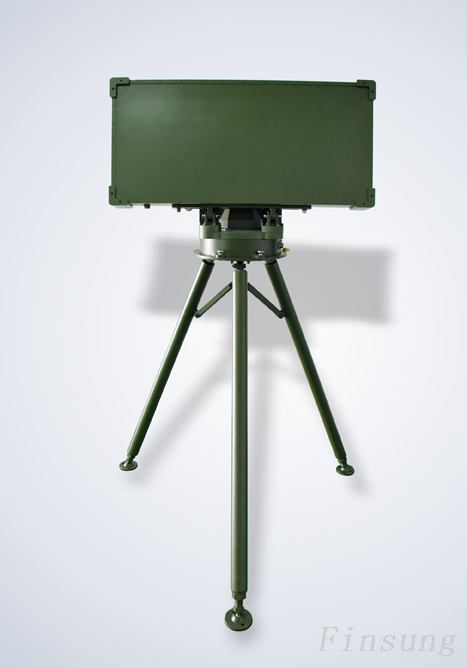
With drones becoming more prevalent, effective drone detection is more critical than ever. But when it comes to technology, is LiDAR or Radar the best choice for detecting these unmanned threats? This article dives into the strengths and weaknesses of both, focusing on performance, weather resistance, range, and cost. In this post, we’ll explore why Radar remains the superior option for most drone detection needs.
LiDAR uses laser pulses to measure distances and create 3D maps. It emits rapid laser beams towards objects, which then reflect back to the sensor, allowing it to calculate distances based on the time it takes for the laser to return.
Applications of LiDAR:
Mapping: LiDAR is widely used for creating accurate topographical maps, especially for areas like forests and urban environments.
Terrain Modeling: It helps model the Earth’s surface in high detail, which is beneficial for engineering and construction.
Other Industries: LiDAR also supports autonomous vehicles, archaeology, and environmental monitoring.
Why is it Considered High-Resolution?
LiDAR’s ability to capture fine details—down to individual trees or small obstacles—makes it high-resolution. It provides accurate data even in dense environments where other methods might struggle.
Radar works by emitting radio waves, which bounce off objects and return to the sensor. By analyzing the reflected waves, Radar can determine the distance, speed, and direction of objects.
Applications of Radar:
Long-Range Detection: Radar is especially effective for detecting objects from long distances, making it ideal for air traffic control and surveillance.
Military Uses: Radar has been a cornerstone in defense technology, helping track enemy aircraft, ships, and missiles.
The Role of Radar in Drone Detection: Radar’s ability to detect drones over long distances—often miles away—makes it essential for real-time airspace monitoring. It operates reliably in almost all weather conditions, making it a powerful tool for detecting unauthorized drones in various environments.
LiDAR is effective for detecting drones up to about 1,000 feet. While this range is sufficient for close-up applications, it limits its effectiveness for wide-area monitoring.
Radar, on the other hand, can detect drones from 30,000 feet away, giving it a massive advantage for early detection. This extended range is crucial for security, as it allows for timely responses to potential threats from far-off locations.
LiDAR's performance is significantly affected by weather conditions. Rain, fog, or even dust can scatter the laser beams, causing it to lose accuracy or completely fail in some conditions.
Radar excels in all-weather performance. It uses radio waves, which are not impacted by weather as much as LiDAR’s laser-based system. Whether it's raining, snowing, or foggy, Radar still delivers reliable results. For example, during a foggy night at an airport, Radar remains effective at detecting drone movement, while LiDAR might struggle.
LiDAR systems come at a high cost and require significant infrastructure. Scaling LiDAR to cover large areas, like airports or industrial sites, involves deploying numerous sensors, making it complex and expensive.
Radar, however, is more cost-effective for large-scale deployment. One radar unit can cover thousands of feet in all directions, which makes it suitable for protecting expansive sites. Additionally, Radar’s maintenance costs are lower compared to LiDAR’s, particularly in large-scale installations.
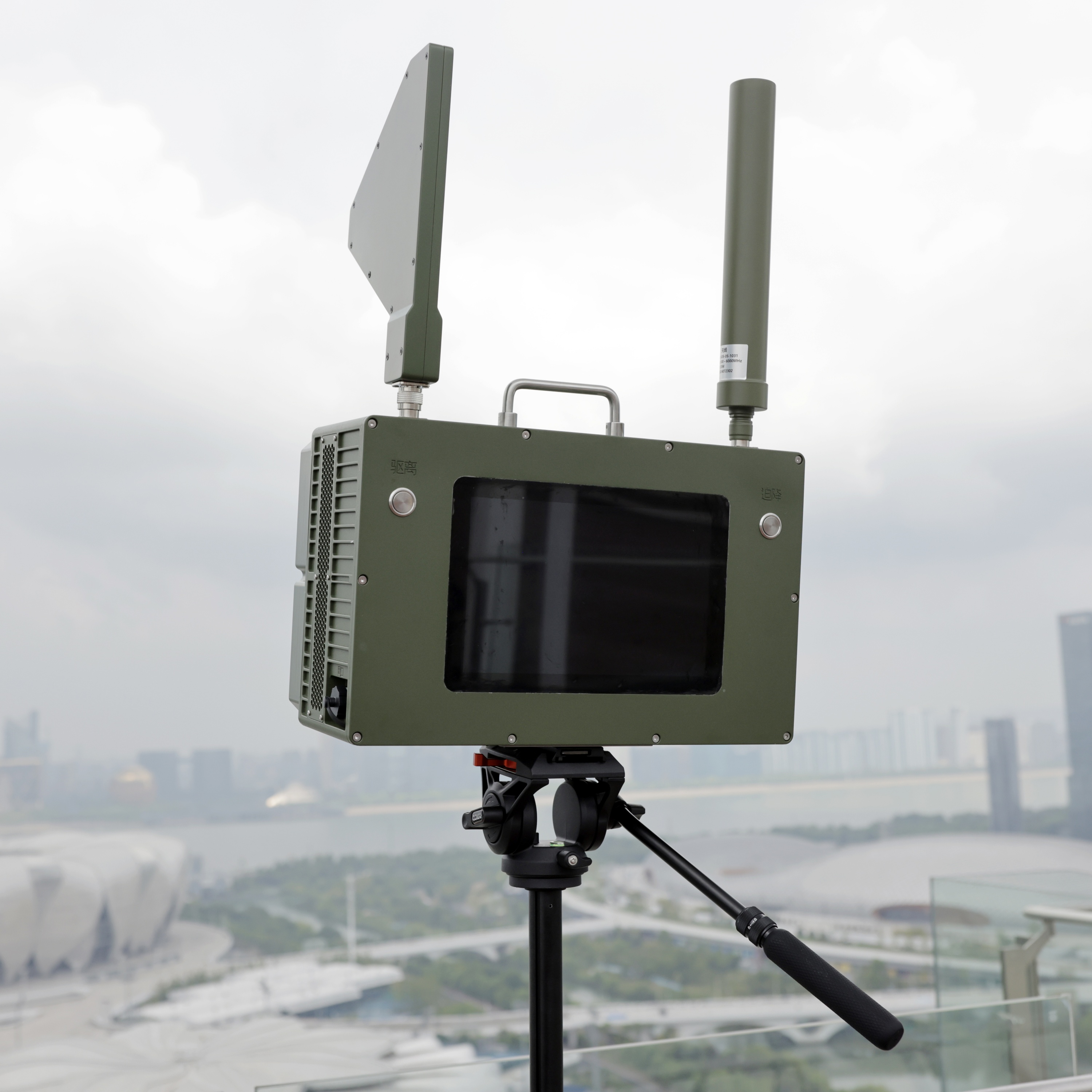
Radar’s ability to detect drones at long distances gives security teams crucial time to assess potential threats. For instance, in airport security, Radar can pick up a drone miles away, allowing security to prepare and respond swiftly.
In contrast, LiDAR, with its shorter range, would miss these early threats and delay the response. This early detection is vital for preventing potential security breaches in large areas, such as military bases or airports.
Radar works in all weather conditions—rain, snow, or fog. Its radio waves pass through these obstacles without losing effectiveness. For example, Radar can detect a drone flying through dense fog, ensuring continuous surveillance even in challenging environments.
LiDAR, however, struggles in similar conditions. Fog, rain, or dust can scatter its laser beams, making it unreliable during adverse weather. This limitation significantly impacts security operations, where constant reliability is essential.
Radar’s technology is fine-tuned to detect small drones, even those designed to evade detection. Unlike traditional radar, modern systems are designed to detect objects with small radar cross-sections—such as hobbyist drones or stealth drones.
LiDAR, while detailed, is less effective in tracking fast-moving or small objects at a distance. Radar’s precision and ability to track evasive drones make it a superior choice for security and airspace management, especially as drone technology becomes more advanced and harder to detect.
LiDAR is highly valued in mapping and terrain modeling for its accuracy and ability to create detailed 3D models. In industries like agriculture, construction, and urban planning, LiDAR helps map landforms, vegetation, and structures with precision.
For example, LiDAR is used to map forest canopies, assess vegetation density, and even detect changes in topography. This level of detail is essential for tasks like calculating soil erosion, flood modeling, or planning new construction projects.
LiDAR is also useful in environmental monitoring. It captures precise data about ecosystems, making it easier to study and protect natural habitats.
LiDAR is a key technology in autonomous driving. It creates accurate, real-time maps of the road, helping vehicles detect obstacles, pedestrians, and other objects. With its high-resolution capability, LiDAR can map surfaces and surroundings with great detail, ensuring that autonomous vehicles safely navigate complex environments.
In drone navigation, LiDAR improves safety by helping drones avoid obstacles and fly smoothly through controlled environments. It also enables drones to follow precise flight paths, making it ideal for tasks like aerial surveying, package delivery, or infrastructure inspection, where accuracy is critical.
Radar shines in security applications due to its long-range detection capabilities. It can spot drones from miles away, providing valuable time for response. This is especially crucial for large-scale sites like airports, military bases, and prisons, where early detection is key to preventing security breaches.
Radar is also highly resilient in bad weather. Unlike LiDAR, which struggles in rain, fog, or snow, Radar remains effective in nearly any condition. Its ability to function in all weather types makes it the ideal choice for critical infrastructure.
Cost-effectiveness is another reason Radar is preferred. It can cover vast areas using fewer units, making it more affordable for large facilities compared to the high cost and complexity of scaling LiDAR systems.
While LiDAR has its limitations in drone detection, it still plays a key role in non-security uses. LiDAR’s ability to capture high-resolution 3D data makes it invaluable in applications like 3D mapping, environmental surveying, and landscape analysis. It provides detailed insights into terrains, structures, and vegetation that other systems can't match.
In drone detection, LiDAR can complement Radar. While Radar excels in detecting drones at long distances and through poor weather, LiDAR can offer more detailed information once a drone is within range. By integrating both systems, you get the best of both worlds: Radar’s range and LiDAR’s precision.
Radar remains the superior choice for drone detection due to its long range, all-weather performance, and cost-effectiveness. Its scalability makes it ideal for large-scale sites. While LiDAR offers detailed data, it is less effective for large-area, real-time detection. For most security needs, Radar is the best solution. Evaluate your requirements carefully to choose the right technology for your drone detection needs.
A: Yes, Radar can operate in low-light conditions, unlike LiDAR which may need light to operate.
A: LiDAR has its strengths but struggles with long-range detection, especially for fast-moving or small drones.
A: Radar systems are generally more cost-effective, particularly for covering large areas or multiple sites.


