
 English


Views: 0 Author: Site Editor Publish Time: 2025-09-15 Origin: Site


Drones are everywhere—capturing photos, delivering goods, and even raising security concerns. But who is watching the skies? Drone detection helps track unauthorized drones, ensuring safety, privacy, and compliance. It identifies, monitors, and alerts before problems occur. In this post, you’ll learn what drone detection is, how it works, and why it’s essential today.
Drones are now ubiquitous, filming concerts, dropping off parcels, and mapping terrain, and their ranks swell by the year as the global UAV market booms; millions already circle the skies, adopted at break-neck speed by hobbyists, industry, and the military alike.
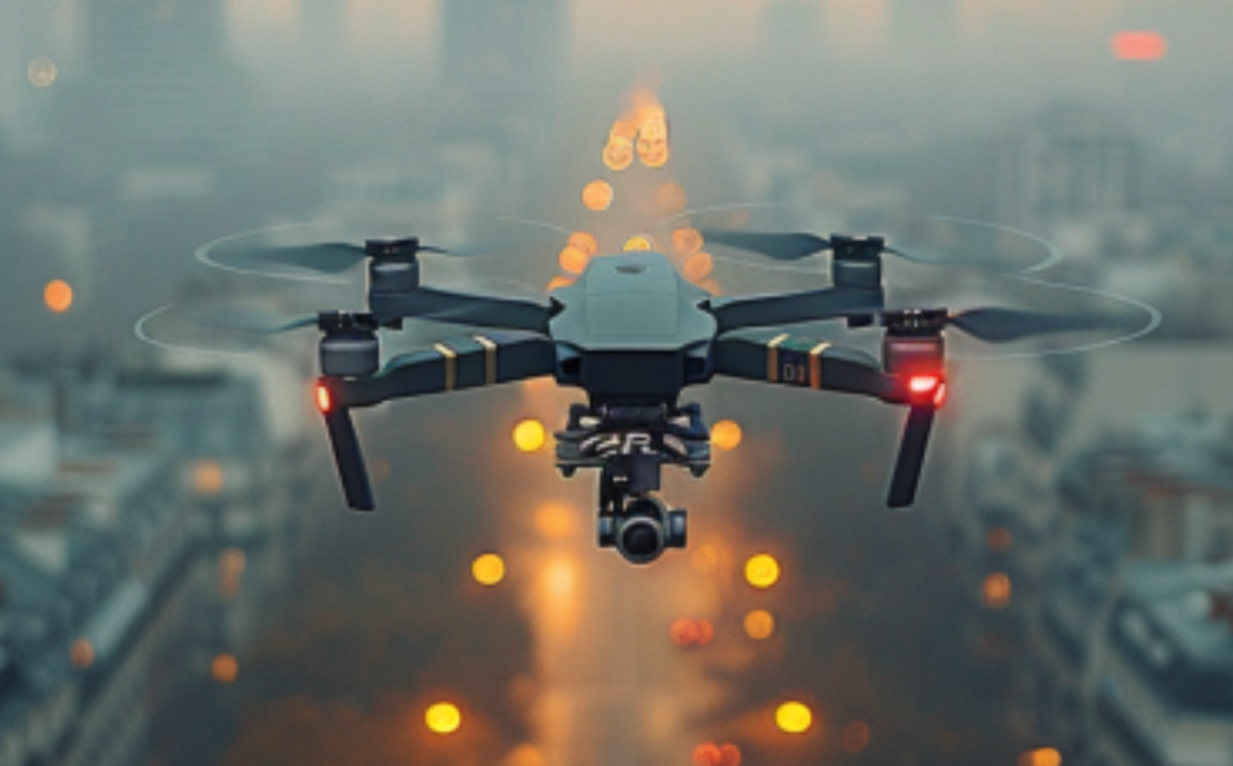
Left untracked, however, they invite serious danger: a single off-the-shelf quadcopter can steal sensitive imagery for espionage, ferry contraband over prison walls, loft a homemade bomb into a stadium, or hover outside a boardroom window to spy on executives.
Physical safety is equally at risk—airports brace for mid-air collisions, power plants fear sabotage, and packed arenas watch the heavens for a rotor-powered accident waiting to happen. Privacy regulators have responded with rules such as the FAA’s and FCC’s Remote ID mandates that demand real-time accountability, making it legally—rather than merely prudently—necessary to know who is flying what, and where.
Consequently, airports, energy facilities, defense bases, mass-event organizers, and correctional institutions all regard reliable drone detection not as a luxury, but as an operational imperative that keeps flights on schedule, critical infrastructure intact, troops and civilians safe, and contraband on the right side of the fence.
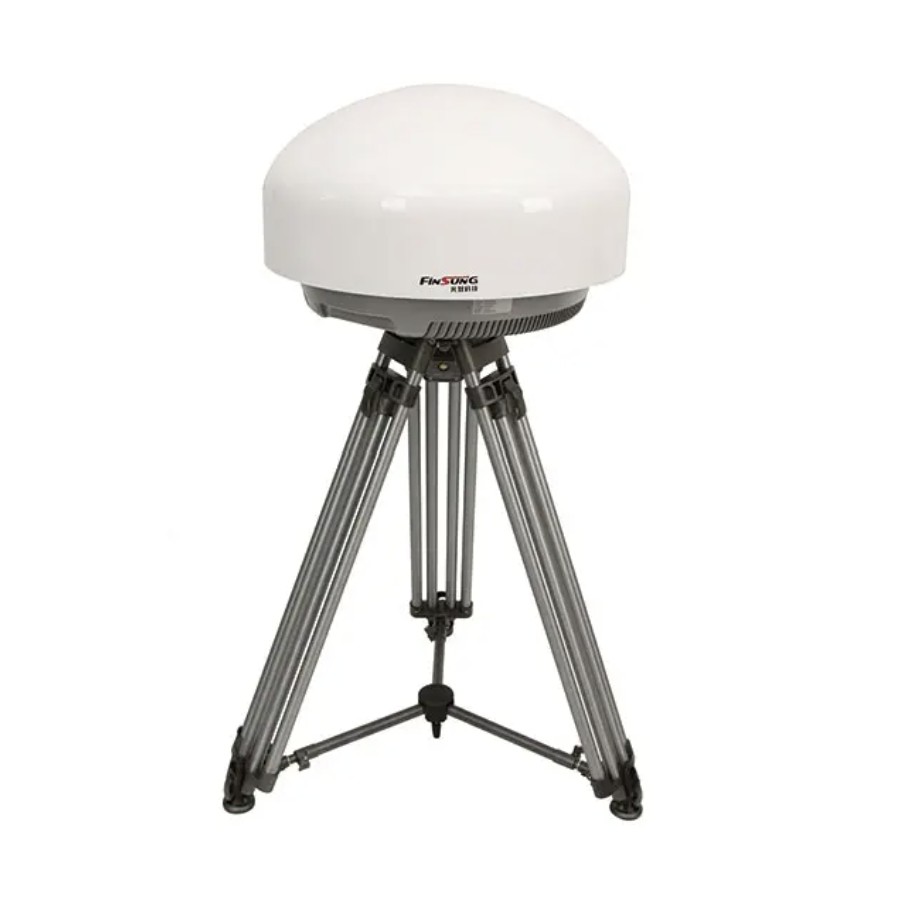
Drone detection is the process of spotting and tracking unmanned aircraft within protected airspace, relying on an integrated suite of sensors and software to reveal not only that a drone is present but exactly where it is flying; it does not neutralize the threat, it simply makes the invisible visible and issues an alert.
This sets it apart from counter-drone systems, which go a step further to jam, capture, or disable intruders—detection supplies the eyes, counter-drone the hands.
A well-designed detection network pursues five tightly linked objectives: it must first identify that an unknown object is a drone, classify its type, model, and flight behavior, continuously track its position, direction, and speed, push real-time notifications to security teams the moment boundaries are crossed, and finally record the entire encounter to satisfy compliance audits or furnish courtroom evidence. By achieving these goals, the system turns an opaque sky into a transparent, accountable environment where every rotor flash is logged, analyzed, and ready for action.
Quick Look:
Identify – know a drone is present.
Classify – type, model, flight pattern.
Track – record position, direction, speed.
Alert – send notifications to security teams.
Record – store data for review, compliance, evidence.
These goals keep airspace visible, safe, and under control.
Drone detection is a layered process that fuses multiple sensors, signals, and intelligent software so that every new feed reinforces the others, steadily shrinking the odds that anything flies unseen.
Remote ID acts like a digital license plate, continuously broadcasting the drone’s serial number, the pilot’s GPS coordinates, altitude, speed, and heading; any receiver that hears the message can instantly plot the aircraft on a map and archive the data for regulators. The catch is that only compliant models transmit, so a single layer is never enough.
Radio-frequency (RF) detection therefore listens for the invisible handshake between controller and aircraft, capturing both the uplink commands and the downlink video or telemetry. Because the link is active whether the drone is “licensed” or not, RF sensors can geolocate both ends of the connection without needing a visual line of sight, although downtown canyons, Wi-Fi clutter, and legal limits on what can be stored can cloud the picture.
Direction-finding (DF) RF arrays sharpen that picture by adding a compass arrow: by comparing the microsecond difference in arrival times at several antennas, the system draws a real-time vector that shows security teams not merely that a drone is out there, but where it launched, where it is headed, and how fast.
Radar provides the next brick in the wall, sending out pulses and measuring the time-of-flight of the returning echo to calculate range, speed, and altitude. Because a quadcopter’s spinning blades create a distinctive micro-Doppler modulation on top of the main return, modern radars can discard false alarms from birds, plastic bags, or wind-blown debris; yet even so, the drone’s small radar cross-section and low-altitude hugging of terrain can still hide it from legacy systems.
Electro-optical and infrared (EO/IR) turrets give human eyes a confirming view, zooming from wide field to tight close-up so an operator can read the model number, inspect a dangling payload, or follow an erratic flight path at night. The cameras ingest the radar or RF cue, slew automatically to the target, and record high-definition evidence for later prosecution, although fog, glare, or a setting sun can blank the screen.
Finally, acoustic sensors listen for the unique spectral fingerprint each motor and propeller combination generates; machine-learning models trained on thousands of samples can distinguish a DJI Mini from a racing quad or a gasoline helicopter at a few hundred meters. Range is short—often under a kilometer—and urban noise, wind, or a cheering football crowd can drown the whir, so acoustics usually serve as a last-gap confirmation inside tight perimeters such as prison yards or stadium rooftops.
Taken together, these layers create a fused air-surveillance picture: Remote ID provides instant compliance data, RF and DF track the pilot and the link, radar measures precise kinematics, EO/IR delivers visual proof, and acoustics guards the final few hundred feet. The software correlates every hit in real time, discarding ghosts, ranking threats, and pushing a single consolidated track to the security officer’s phone—turning an empty sky into a transparent, searchable, and defensible volume.
Modern drone-detection systems are no longer content merely to sound an alarm; they continuously harvest a rich, time-stamped data set that lets security officers visualize the airspace as clearly as they do the ground.
By triangulating Remote ID broadcasts, RF emissions, radar returns, and optical cues, the software estimates and updates the GPS coordinates of both the aircraft and its pilot, turning a blinking dot on a map into actionable intelligence that tells responders not just where to look, but where to drive if they want to intercept the operator at the source.
Layered on top of the position fix is a live kinematic feed: altitude above ground level, instantaneous speed over ground, magnetic heading, and slant distance to the closest sensitive zone—numbers that let a watchstander judge whether the drone is lazily circling at 150 ft or sprinting at 50 mph straight toward a refinery flare stack.
Because every model of unmanned aircraft carries a unique RF signature, propeller modulation, and visual silhouette, the fusion engine can classify the exact make and model—distinguishing, for example, a 249-gram hobby quad from a heavy-lift octocopter capable of carrying a kilogram of contraband—so commanders know within seconds whether they are facing a birthday present or a purpose-built threat.
The entire encounter is memorialized for later scrutiny: a breadcrumb trail of latitude/longitude pairs replayed on a 3-D map, synchronized EO/IR video that can be frozen to read a serial number or measure payload dimensions, and raw sensor logs that satisfy chain-of-custody rules for civil or criminal proceedings.
Finally, the platform pushes real-time alerts through whatever channel operators prefer—pop-up tiles on the SOC wall, SMS texts to roving patrols, encrypted e-mails to facility managers, or color-coded icons on a browser-based dashboard—ensuring that the moment a geofence is clipped, the right people know the story the sky is telling and can launch a proportional response before the drone’s mission is complete.
Drone detection turns from “nice-to-have” into mission-critical wherever the sky touches high-value assets, large crowds, or sensitive operations, and each domain extracts a slightly different dividend from the same core technology.
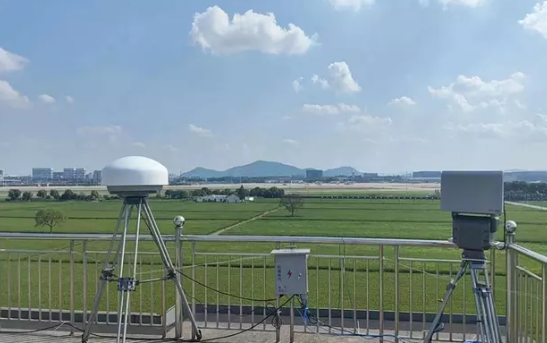
At airports, a two-kilogram plastic quadcopter can paralyze a hub: runway incursions force holding patterns that ripple into nationwide delays, and an engine ingestion could cost hundreds of millions in liability. By fusing radar, Remote-ID, and multilateration feeds, tower controllers receive a 3-D track up to ten kilometres out—enough time to halt take-offs, dispatch patrol cars to the intruder’s GPS coordinates, or switch landing approaches before passengers ever feel a bump.
Stadiums and arenas face a different calculus: 70,000 fans in an open bowl create a target-rich environment where a crashing drone or a dropped payload can trigger stampedes. Integrated RF-optical systems give security chiefs a “sky curtain” that automatically locks a pan-tilt-zoom camera onto any unknown track, displays it on the Jumbotron control desk, and triggers a pre-recorded PA announcement to pause the concert or game while ushers move spectators away from the impact zone—all in under thirty seconds.
Prisons and border facilities wrestle with miniature logistics networks: drug-laden quad-copters follow pre-programmed waypoints to drop heroin, cell phones, or USB drives into exercise yards, while cross-border smugglers scout patrol schedules before running narcotics at night. Detection grids that combine acoustic sensors with micro-radars can spot a DJI Mini at 500 metres, correlate it with a heat signature on the perimeter road, and queue a jammer or capture drone to intercept the package before it touches razor wire.
Energy and utility sites—refineries, LNG terminals, nuclear cooling towers—sit at the intersection of catastrophic consequence and relatively soft perimeter defenses. A drone rigged with a thermite grenade could cripple a transformer farm serving a major city; early warning systems that classify a drone’s payload capacity and hover time let plant managers trip emergency shutdowns, reroute power flows, or dispatch armed response while the aircraft is still loitering three kilometres out, turning a potential national headline into a footnote.
Corporate and government campuses house intellectual property worth billions: prototype chips, pharma formulas, or classified briefings on the 12th floor. A silent camera drone climbing the façade at 2 a.m. can vacuum up whiteboard sketches through polarized glass. RF-direction-finding overlays on building-management systems tell security exactly which window the drone is filming, cue silent alarms, and generate forensic video that stands up in trade-secret litigation—often before the pilot even realizes the building is instrumented.
Finally, law-enforcement and public-safety agencies deploy portable “pop-up” detection nets during protests, presidential visits, or mass-casualty incidents. A backpack-sized RF kit on a tripod can create a two-kilometre geofence around a parade route, pushing SMS alerts to bomb-tech teams when a new track appears, complete with pilot location and live video. Officers gain the initiative: they can approach the operator, serve a citation, or confiscate the aircraft before it overflies the motorcade—turning reactive 9-1-1 calls into proactive interdictions measured in minutes, not hours.
Technology evolves fast, and drone detection follows the same path. Future systems will be smarter, faster, and more adaptive.
Artificial-intelligence engines are moving from simple “bird-versus-drone” filters to self-learning networks that ingest micro-Doppler radar signatures, propeller-beat acoustics, and infrared silhouences simultaneously.
Overnight retraining on fresh data lets the model recognize a just-released racing quad or a DIY octocopter built from off-the-shelf parts, slashing false-alarm rates below one percent and even predicting intent—loitering, climbing, or sprinting—by comparing flight dynamics to thousands of previous threat profiles. Cloud-based federated learning will allow every sensor node worldwide to contribute anonymized signatures, so a drone first spotted in Tokyo can be identified instantly when it appears over a Texas prison the next day.
Tomorrow’s control rooms will not rely on a lone operator staring at a blip; instead, edge-computing boxes will fuse RF direction-finding, 3-D radar voxels, EO/IR pixels, and acoustic vectors into a single “air-track” in under 200 milliseconds.
When confidence crosses a threshold, the software will auto-queue a pan-tilt-zoom camera, cue a jammer, send an SMS to the nearest patrol car, and open a cloud case file—without human intervention. The result is a self-healing mesh: if fog blinds the camera, radar and RF maintain custody; if the pilot switches off the controller, EO/IR and acoustics pick up the slack, delivering the same quality of coverage 24/7 with fewer trained personnel.
The FAA’s Remote ID rule is only the first domino; Europe’s U-space, Japan’s tiered mandates, India’s digital sky platform, and Brazil’s vANT will create a global airspace where virtually every new drone transmits an open, authenticated signal.
Detection vendors are already baking remote-ID receivers into streetlights, stadium routers, and even police body-worn cameras, effectively turning cities into open-source air-traffic displays. Encrypted “direct” Remote ID over 5G and satellite back-haul will extend coverage far beyond ground-based receivers, letting an offshore wind-farm security officer track a drone from 50 nautical miles out while the aircraft is still over the horizon.
Next-generation threats will not betray themselves with easy-to-monitor controller links. Fully autonomous drones running vision-based navigation can fly GPS- and radio-silent, forcing detectors to lean on radar micro-Doppler, novel computer-vision gait analysis, and even LIDAR to spot rotor wash. Swarms add another order of magnitude: dozens of tiny aircraft converging on a single target in a coordinated time-on-top attack can saturate legacy trackers.
Counter-swarm AI is emerging that assigns a “threat index” to every blip, clusters inbound tracks, and recommends optimal engagement sequences—jam the leader, spoof the middle tier, kinetic-net the stragglers—while continually re-evaluating as new members launch or retreat. Hypersonic glide drones and AI-piloted fixed-wing hybrids flying at 200 mph just above the treetops will push update-rate requirements toward kilohertz radar frames and sub-ten-millisecond fusion latency, ensuring the detection arms race remains as dynamic as the drones it seeks to uncover.
A: Drone detection identifies and tracks unmanned aircraft in protected airspace. It matters for safety, security, privacy, and compliance. Airports, events, prisons, and critical infrastructure rely on it to stop accidents, espionage, or unauthorized flights.
A: Yes. RF-based systems often detect both drone and pilot by monitoring uplink and downlink signals. Location estimates guide responders.
A: RF systems detect most drones quickly, even without line of sight. Radar, EO/IR, and acoustic sensors add layers for non-compliant or radio-silent drones.
A: Remote ID broadcasts drone ID, operator location, altitude, and speed. Detection systems use this data to track compliant drones easily.
A: Laws differ. Remote ID is mandatory in some regions. Privacy rules may restrict how detection systems capture or store operator data.
A: Not every site needs it. Airports, stadiums, prisons, utilities, and government campuses benefit most from drone detection technology.
A: No. Detection only identifies and tracks drones. Counter-drone systems handle disruption, capture, or neutralization separately.
Drone detection has become essential as drones proliferate across industries—from airports to utilities, events to prisons. This article explains what drone detection is, how it works (Remote ID, RF, radar, EO/IR, acoustic sensors), plus what data it provides, where it’s most valuable, the benefits it delivers, and how future trends (AI/ML, automated layered systems, new threat types) are reshaping the field.
In today’s environment, mastering drone detection is critical for safety and compliance. Fanshuang Tech is a trusted provider of advanced drone detection equipment, offering RF detectors, EO/IR camera systems, and integrated sensor solutions tailored for airports, prisons, public events, and critical infrastructure. For reliable protection of your airspace, explore the full range of solutions here: Fanshuang Tech Drone Detection Products.


